Industrial Water Infrastructure
Our Assets
Majis owns and operates a portfolio of mission‑critical water and wastewater assets that form the backbone of Sohar’s industrial ecosystem. Designed for resilience, efficiency, and long‑term performance, these facilities enable continuous industrial operations while meeting the highest operational, safety, and environmental standards.
Our Assets
Engineering Strength & Reliability
Majis operates advanced seawater extraction, desalination, cooling, and wastewater treatment facilities designed to ensure reliable, efficient, and sustainable water services for industrial clients.
Seawater Intake System
Cooling Water Network
Desalination & Potable Water Plant
Effluent Treatment & Reuse Facility
Seawater Intake Plants (SWIP 1 & SWIP 2)
Majis owns and operates two high‑capacity seawater intake plants forming the foundation of its industrial water infrastructure in Sohar. Designed to support continuous, large‑scale industrial operations, these facilities supply screened and chlorinated seawater to industrial clients through dedicated pump bays and Majis’s integrated cooling water network. Together, Seawater Intake Plant 1 and Seawater Intake Plant 2 provide resilient and scalable seawater abstraction capacity, ensuring reliable supply under demanding operating conditions while supporting long‑term industrial growth in Sohar.
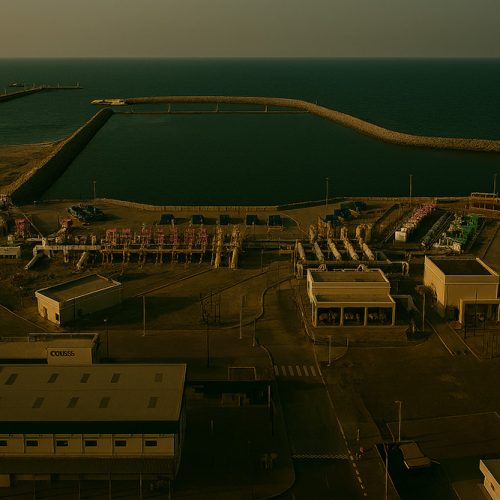
Location: Sohar, Oman
Year of Commissioning: 2006
Maximum Capacity: 340,000 m³/hour
Seawater Intake Plant 1 processes and delivers chlorinated seawater free of particles larger than 3 millimetres. The facility is equipped with advanced screening and electro‑chlorination systems designed to ensure consistent water quality and protect downstream industrial cooling and treatment systems.
The pumping station features multiple revolving bar and band screen systems within each distribution bay, providing robust mechanical protection against debris. An integrated electro‑chlorination plant supports effective biofouling control through on‑site chlorine generation, ensuring operational reliability and asset protection for industrial clients.
Location: Sohar, Oman
Year of Commissioning: 2016
Maximum Capacity: 400,000 m³/hour
Seawater Intake Plant 2 operates as an extension of SWIP 1, sharing a similar configuration and treatment philosophy. The plant enhances Majis’s overall seawater abstraction capacity, providing additional operational flexibility and redundancy to meet growing industrial demand.
Like SWIP 1, the facility delivers chlorinated seawater screened to remove particles larger than 3 millimetres, supported by advanced mechanical screening systems and high‑capacity electro‑chlorination units. SWIP 2 plays a critical role in strengthening supply security, supporting future industrial expansion, and ensuring system resilience across Majis’s seawater and cooling water networks.
Reverse Osmosis Plant – ROP
Majis operates advanced desalination and water treatment facilities that produce high‑quality potable and process water in line with recognized international standards. These assets play a critical role in supporting industrial operations, workforce requirements, and essential services across Sohar Industrial Port, the Freezone, and Sohar Industrial Estate, ensuring consistent quality, reliability, and supply security.
Location: Sohar, Oman
Year of Commissioning: 2013
Current Capacity: 20,000 m³/day
Utilization Rate: 100%
The Reverse Osmosis Plant provides industrial process water with very low Total Dissolved Solids (TDS) levels, reaching up to 25 ppm, to meet stringent industrial specifications. In parallel, the facility produces potable water to serve the same industrial zones, supporting both operational continuity and workforce welfare.
The plant is designed to produce both the industrial process water and potable water, utilizing a robust and energy‑efficient treatment process. A micro‑filtration pre‑treatment system, followed by a two‑pass reverse osmosis configuration, ensures consistent water quality while protecting downstream industrial processes. The facility operates with dedicated power infrastructure and complies fully with Oman’s environmental laws and regulations.
Capacity Expansion – BOO Desalination Plants
In response to growing industrial demand within the Sohar industrial ecosystem, Majis has contracted with two reputed national companies to develop additional desalination capacities under Build–Own–Operate (BOO) arrangements. This strategic expansion will increase the combined potable and process water capacity to up to 60,000 m³/day, ensuring Majis remains well positioned to meet the requirements of existing and future industries.
These BOO plants reinforce Majis’s long‑term commitment to supply security, operational resilience, and sustainable industrial growth, while enabling timely capacity scaling aligned with Sohar’s continued development.
Central Effluent Treatment & Recycling Plant
Majis operates centralized facilities for the collection, treatment, and reuse of industrial and sanitary wastewater, forming a cornerstone of its sustainable infrastructure portfolio in Sohar. By safely treating and recycling effluent for approved industrial applications, these assets support responsible operations, reduce reliance on freshwater resources, and enable circular water management across the industrial ecosystem.
Location: Sohar, Oman
Year of Commissioning:
Phase 1: 2015
Phase 2: 2017
Maximum Capacity: 20,000 m³/day (20 MLD)
Utilization Rate: 70%
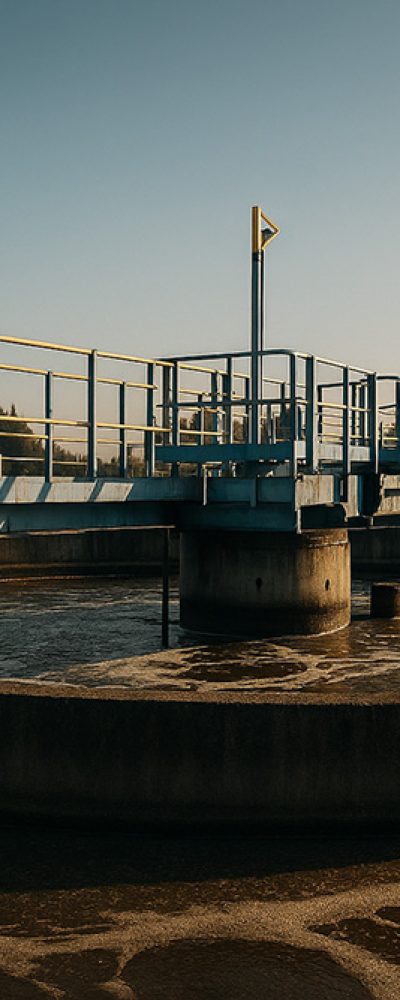
The Central Effluent Treatment & Recycling Plant is designed to collect, treat, and recycle industrial effluent and domestic wastewater generated by tenants operating within Sohar Industrial Port and the Freezone. Through advanced treatment processes, the plant converts treated effluent into high‑quality process water with very low Total Dissolved Solids (TDS) levels, reaching up to 25 ppm, suitable for reuse in industrial applications.
CETRP is connected to an extensive effluent collection and transfer network equipped with state‑of‑the‑art monitoring and control systems, enabling continuous oversight and effective management of off‑specification discharges. This integrated network ensures operational protection, regulatory compliance, and system reliability across the wastewater value chain.
Developed in two expansion phases, each with a capacity of 10,000 m³/day, the plant provides scalable treatment capacity to support current industrial activity while accommodating future growth. CETRP plays a vital role in minimizing environmental impact, supporting sustainable industrial development, and reinforcing Majis’s commitment to resource efficiency and environmental stewardship.
Water Distribution and Effluent Collection Networks
Majis operates an integrated portfolio of water distribution and wastewater collection networks across Sohar industrial ecosystem, enabling reliable utility services for tenants in Sohar Industrial Port (SIPA), Sohar Freezone (SFZ), and selected areas of Sohar Industrial Estate (including Phase 7). The potable water network (commissioned 2007) supplies the drinking-water stream to industrial customers and external offtakers—delivering more than 14,000 m³/day and designed for up to 35,000 m³/day—through 58.83 km of HDPE and ductile iron pipelines supported by five pump stations operating at 6–7 bar. Complementing this, the process water network (commissioned 2009) conveys industrial process water across 8.83 km of GRE/HDPE pipelines with six pumps at 2.5 bar and a maximum capacity of 40,000 m³/day, while the common cooling water network (commissioned 2009) provides local cooling water supply via 15.75 km of GRP pipelines supported by four pumps at 2 bar with a maximum capacity of 60,000 m³/hour. On the collection side, Majis operates a treated industrial effluent network (commissioned 2013) spanning 13 km (HDPE/GRE) and equipped with 11 online monitoring systems to maintain control and compliance, with a maximum capacity of 20,000 m³/day at 2.5–4 bar. This is complemented by the domestic sewage discharge network (commissioned 2012), which includes 29.87 km of HDPE pipelines and 30 lifting stations to collect domestic sewage at 1.5–2 bar (maximum 3,000 m³/day), alongside an irrigation water network (commissioned 2012) supporting landscaping and agricultural uses through 5 km of HDPE pipelines operating at 2.5–4 bar (maximum 430 m³/day).